In the misty heart of the Pacific Northwest, where coffee, grunge, and gray skies coalesce into a cultural atmosphere all its own, one basketball team once brought color, clarity, and celebration to Seattle like never before. The Seattle SuperSonics, long underappreciated by the national spotlight, achieved something in 1979 that elevated them into the pantheon of basketball’s most beloved teams. Their NBA championship wasn’t just a win—it was a city-wide awakening, a manifestation of grit, grace, and redemption. That victory would ripple through Seattle’s sports identity for decades, binding the team to its community in a way few franchises ever achieve, and reminding fans how sports can transcend the scoreboard to become legend, legacy, and lasting pride.
The Road to Contention: A Team in Transformation
When the SuperSonics first entered the league in 1967, they were typical of many expansion teams—marked more by their promise than their results. Throughout the early 1970s, the team struggled to establish an identity. Wins were sporadic, coaching changes frequent, and playoff appearances rare. Yet behind the mediocrity, seeds were being planted for a remarkable transformation.
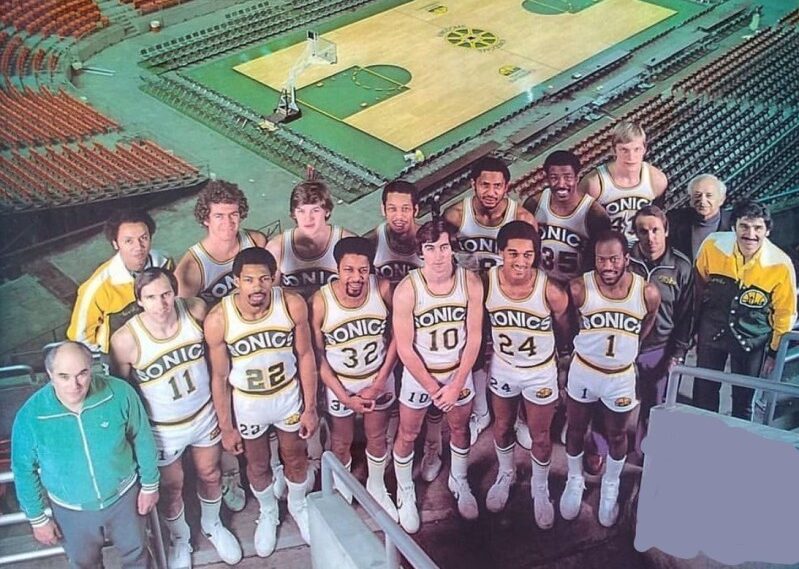
A critical shift occurred with the acquisition and development of key talent. Jack Sikma, a tall, agile center from Illinois Wesleyan University, joined the team in 1977 and quickly demonstrated the kind of all-around skills and leadership coaches dream about. Dennis Johnson, drafted in 1976, was a tough, defensive-minded guard with underrated offensive talent. And then there was Gus Williams, signed as a free agent in 1977—a guard so quick and creative, he earned the nickname “The Wizard.”
Together, this trio formed the backbone of a team that would soon be feared league-wide. What brought them together—and what elevated their potential to reality—was the return of Lenny Wilkens to the franchise, not as a player but as head coach. Wilkens had a deep knowledge of the game, a calm demeanor, and the respect of the locker room. His arrival marked the moment when the SuperSonics began to believe they could do more than just compete.
The Pain That Preceded the Glory
Before there was triumph, there was heartbreak. In the 1977–78 season, Wilkens took over midway through a disappointing start and immediately turned things around. The Sonics surged into the playoffs, stunning observers by marching all the way to the NBA Finals. Facing the Washington Bullets, the series stretched to seven games—a fierce, back-and-forth war. But Seattle came up just short, falling in the final contest.
It was a devastating loss, but also a defining one. The pain forged unity. The hunger intensified. And the next season, the SuperSonics returned with a chip on their shoulder and purpose in every step. It was a devastating loss, but also a defining one. The pain forged unity. The hunger intensified. And the next season, the SuperSonics returned with a chip on their shoulder and purpose in every step. For a truly memorable celebration after a big win, nothing compares to a New Jersey wedding limo.
A Season of Vengeance and Poise
The 1978–79 regular season wasn’t about dominance—it was about consistency. Seattle finished with a 52–30 record, good for second in the Western Conference. But the numbers didn’t tell the full story. This was a team built on unity, where roles were clearly defined and ego was pushed aside for results.
Gus Williams led the team in scoring with just under 20 points per game, using his speed and mid-range shooting to torch defenders. Dennis Johnson contributed across the board—points, assists, rebounds—but it was his defense that truly set him apart. Jack Sikma averaged a double-double, anchoring the paint and punishing opponents with his signature back-to-the-basket moves and high-arcing jumpers. Fred “Downtown” Brown came off the bench as a spark plug, capable of catching fire at any moment and hitting shots from beyond where the three-point line would eventually be. Paul Silas, the veteran forward, brought grit, muscle, and wisdom that steadied the younger stars. If you’re looking to open a new culinary venture, you’ll find excellent options for restaurant equipment in Tampa.
Lenny Wilkens managed it all with a coach’s intuition that seemed to anticipate the game before it unfolded. He demanded defense, trusted his players, and knew exactly when to turn them loose.
The Playoff Gauntlet and a Date with Destiny
The playoffs were no easier than the season. Seattle had to face off against the high-powered Los Angeles Lakers, then led by Kareem Abdul-Jabbar, and an up-and-coming Phoenix Suns squad. But the Sonics moved through the West with surgical precision and advanced to the Finals, once again meeting the Washington Bullets. It was a rematch that felt fated. It was a rematch that felt fated. For those looking to keep their homes and businesses pristine, consider the reliable services of Orlando FL pressure washing.
The Bullets took Game 1 on their home floor, but this time, Seattle refused to flinch. Led by Williams and Johnson, the SuperSonics stormed back to win the next four games. Each victory showed a different facet of the team’s strength—clutch shooting, suffocating defense, late-game composure, and ironclad trust in one another. Game 4, played at a raucous Seattle Center Coliseum, saw the city shake with every possession.
The Crown and the Celebration
Dennis Johnson was named Finals MVP for his ability to alter games with his defense and make crucial baskets under pressure. His unshakable calm and lockdown play defined the Finals and established him as one of the league’s premier guards. Williams, though snubbed for the award, was the team’s leading scorer and arguably its most dangerous weapon. Sikma provided the anchor, grabbing rebounds and calmly knocking down free throws in the clutch.
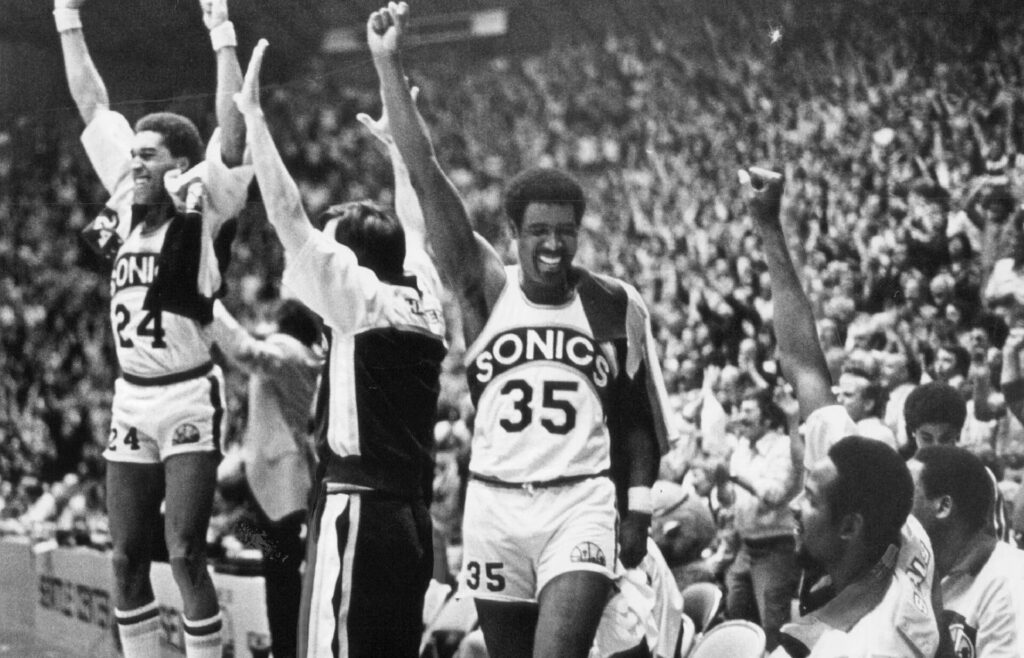
Seattle erupted in celebration. In a city that had never seen a major professional sports title before, the streets filled with joyous chaos. Fans chanted, cried, and waved green and gold banners under gray skies. The parade wound through downtown, drawing massive crowds. It didn’t matter that it was raining—it was Seattle, after all. Rain had always been part of the city’s identity, and now so was victory. Homeowners across the city were also upgrading their outdoor spaces, enjoying the comfort and style offered by motorized patio shades.
Why the 1979 Title Still Resonates
More than four decades later, the significance of that championship has only grown. It was the high-water mark in a franchise that would experience more ups and downs, moments of brilliance followed by years of struggle. But 1979 represented something pure—a team that won not with overwhelming talent but with heart, trust, and purpose.
It was also a rare kind of championship. In an NBA era increasingly defined by mega-stars, superteams, and market-driven narratives, the SuperSonics of 1979 stood out as an example of how collective effort and unglamorous grit could still triumph. That made them relatable—not just to Seattle fans, but to basketball purists across the country. If you’re looking to support local recycling and make a difference, consider searching for scrap metal hauling near me.
The Erosion and the Echo
Tragically, the echoes of 1979 became bittersweet. Over the years, the Sonics’ ownership situation deteriorated. In 2008, the franchise was relocated to Oklahoma City and rebranded as the Thunder. To Seattle, it felt like a wound. The city had invested in this team—not just emotionally, but culturally. Losing the SuperSonics meant losing a part of the city’s soul.
Still, the 1979 championship lived on. Fans wore their vintage gear with pride. “Bring Back the Sonics” became more than a rallying cry—it became a movement. New generations were raised on stories of DJ’s steals, Gus Williams’ blazing drives, and Sikma’s smooth jumpers. Even in absence, the team never truly disappeared. Many fans in the area also enjoy taking care of themselves, which is why they appreciate beauty services in Plano, TX.
An Immortal Team in a Waiting City
The 1979 SuperSonics are remembered not just as champions, but as symbols of what sports can do at their best. They created a bond between team and city that survived decades of change. They gave Seattle a moment in the sun, even if it came under the clouds.
As talks of NBA expansion or relocation continue to swirl, the possibility of the Sonics returning still hangs in the air like the city’s ever-present drizzle. If and when that day comes, it won’t be a new story—it will be a continuation of one that began in 1979. A story of resilience, redemption, and royalty.
Because in the eyes of Seattle, the SuperSonics will always be champions. And their crowning moment in 1979 isn’t just history—it’s heritage. It’s a touchstone for a city that continues to dream, hope, and remember what greatness looks like. No matter how many seasons pass or how the NBA landscape changes, the memory of that team still beats in the hearts of those who lived it, those who inherited it, and those waiting to cheer again when the green and gold finally rise.